


Page 72 - CII-ARTHA
P. 72
ARTHA


              Beyond energy markets, disruptions raise insurance, freight and transit costs, reduce shipping capacity, and spill
              over across global shipping networks - driving higher logistics costs, delays, demurrage charges, and working
              capital pressures.


              The energy infrastructure in the Gulf countries, including extraction sites, refineries, natural gas liquifying
              terminals, has been targeted, necessitating their closure, which has increasing ramifications for the global oil
              market. Brent crude oil prices escalated from US$71 a barrel (28th February 2026 when the war began) to
              almost US$128 a barrel (2nd April 2026). A ceasefire has been announced by the US for 2 weeks starting 9th
              April, however, the situation remains vulnerable amid uncertainties surrounding negotiation outcomes.

              International Energy Agency (IEA) expects global oil demand to decrease by an average of 1mbpd due to the
              West Asia crisis and suspension of flights in the Middle East, reduced jet fuel demand, among others. Several oil
              producing West Asian countries   has slashed oil production (by around 10mbpd) since the beginning of the war
                                        4
              due to limited storage capacity. The IEA mediated a coordinated strategic petroleum release of one-third
              (around 400 million barrels) of its readily available reserves across its 32 member countries. Further, Gulf
              countries are resorting to manually shutting valves to slow down petroleum flows (shut-ins) and if such pauses
              are in effect for an extended period, it can cause structural damage to the production infrastructure.

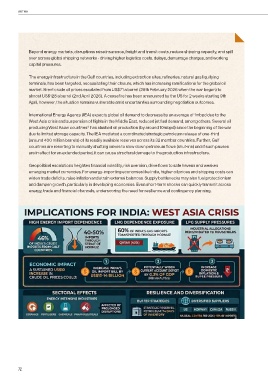
              Geopolitical escalations heighten financial volatility, risk aversion, drive flows to safe havens and weaken
              emerging market currencies. For energy-importing economies like India, higher oil prices and shipping costs can
              widen trade deficits, raise inflation and strain external balances. Supply bottlenecks may also fuel protectionism
              and dampen growth, particularly in developing economies. Even short-term shocks can quickly transmit across
              energy, trade and financial channels, underscoring the need for resilience and contingency planning.


         72

